

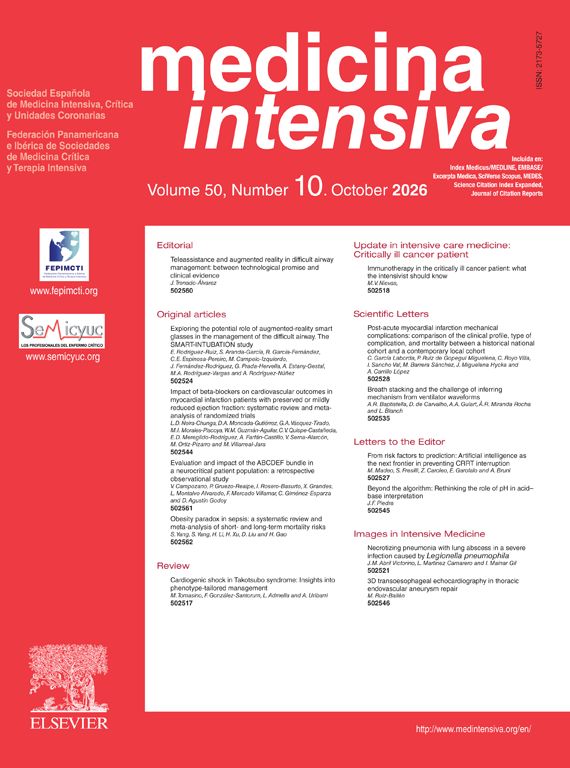
To clarify the association of elevated BMI with short- and long-term mortality in sepsis, and to evaluate this association specifically in patients with a BMI ≥ 40 kg/m2.
DesignSystematic review and meta-analysis.
SettingPubMed, Embase, and the Cochrane Library were searched for studies published up to December 2025. Twelve studies met the inclusion criteria.
ParticipantsTwelve retrospective studies with 130755 adult sepsis patients. Elevated BMI was defined as ≥30 kg/m2; normal weight as 18.5–25.0 kg/m2.
InterventionsNot applicable.
Main variables of interestExposure: BMI ≥ 30 kg/m2. Outcomes: short-term (28-day, 30-day, ICU, in-hospital) and long-term (1-year) mortality. A separate analysis targeted BMI ≥ 40 kg/m2.
ResultsAn elevated BMI was associated with reduced short-term mortality (8 studies: OR 0.75, 95% CI 0.69–0.81; I2 = 11.8%), 28-/30-day mortality (5 studies: OR 0.74, 95% CI 0.68–0.81; I2 = 7.7%), and long-term mortality (2 studies: OR 0.68, 95% CI 0.60–0.77; I2 = 0.0%). This inverse association persisted in patients with BMI ≥ 40 kg/m2 (4 studies: OR 0.70, 95% CI 0.62–0.79; I2 = 26.3%). Sensitivity analyses confirmed robustness.
ConclusionsElevated BMI is associated with lower short- and long-term mortality in sepsis, consistent with the obesity paradox. The inverse association also persisted in patients with a BMI ≥ 40 kg/m2.
Clarificar la asociación entre el IMC elevado y la mortalidad a corto y largo plazo en pacientes con sepsis, así como analizar dicha asociación en aquellos con IMC ≥ 40 kg/m2.
DiseñoRevisión sistemática y metaanálisis.
ÁmbitoSe realizaron búsquedas en PubMed, Embase y la Cochrane Library de estudios publicados hasta diciembre de 2025. Doce estudios cumplieron los criterios de inclusión.
ParticipantesDoce estudios retrospectivos con 130.755 pacientes adultos con sepsis. El IMC elevado se definió como ≥30 kg/m2; el peso normal como 18,5–25,0 kg/m2.
IntervencionesNo aplicable.
Variables de interés principalesExposición: IMC ≥ 30 kg/m2. Resultados: mortalidad a corto plazo (28 días, 30 días, Unidad de Cuidados Intensivos, intrahospitalaria) y a largo plazo (1 año). Se realizó un análisis separado para pacientes con IMC ≥ 40 kg/m2.
ResultadosUn IMC elevado se asoció con una menor mortalidad a corto plazo (8 estudios: OR 0,75, IC del 95% 0,69–0,81; I2 = 11,8%), mortalidad a 28/30 días (5 estudios: OR 0,74, IC del 95% 0,68–0,81; I2 = 7,7%) y mortalidad a largo plazo (2 estudios: OR 0,68, IC del 95% 0,60–0,77; I2 = 0,0%). Esta asociación inversa persistió en pacientes con IMC ≥ 40 kg/m2 (4 estudios: OR 0,70, IC del 95% 0,62–0,79; I2 = 26,3%). Los análisis de sensibilidad confirmaron la robustez de los resultados.
ConclusionesUn IMC elevado se asocia con una menor mortalidad a corto y largo plazo en pacientes con sepsis, en consonancia con la paradoja de la obesidad. La asociación inversa también persistió en pacientes con IMC ≥ 40 kg/m2.
Article
Go to the members area of the website of the SEMICYUC (www.semicyuc.org )and click the link to the magazine.