

Editado por: Juan Antonio Llompart-Pou - Specialist in Intensive Care Medicine, Doctorate in Health Sciences, Universitat Illes Balears. Department of Intensive Care Medicine, Trauma and Neurocritical ICU, Hospital Universitari Son Espases. Palma, Spain
Última actualización: Octubre 2026
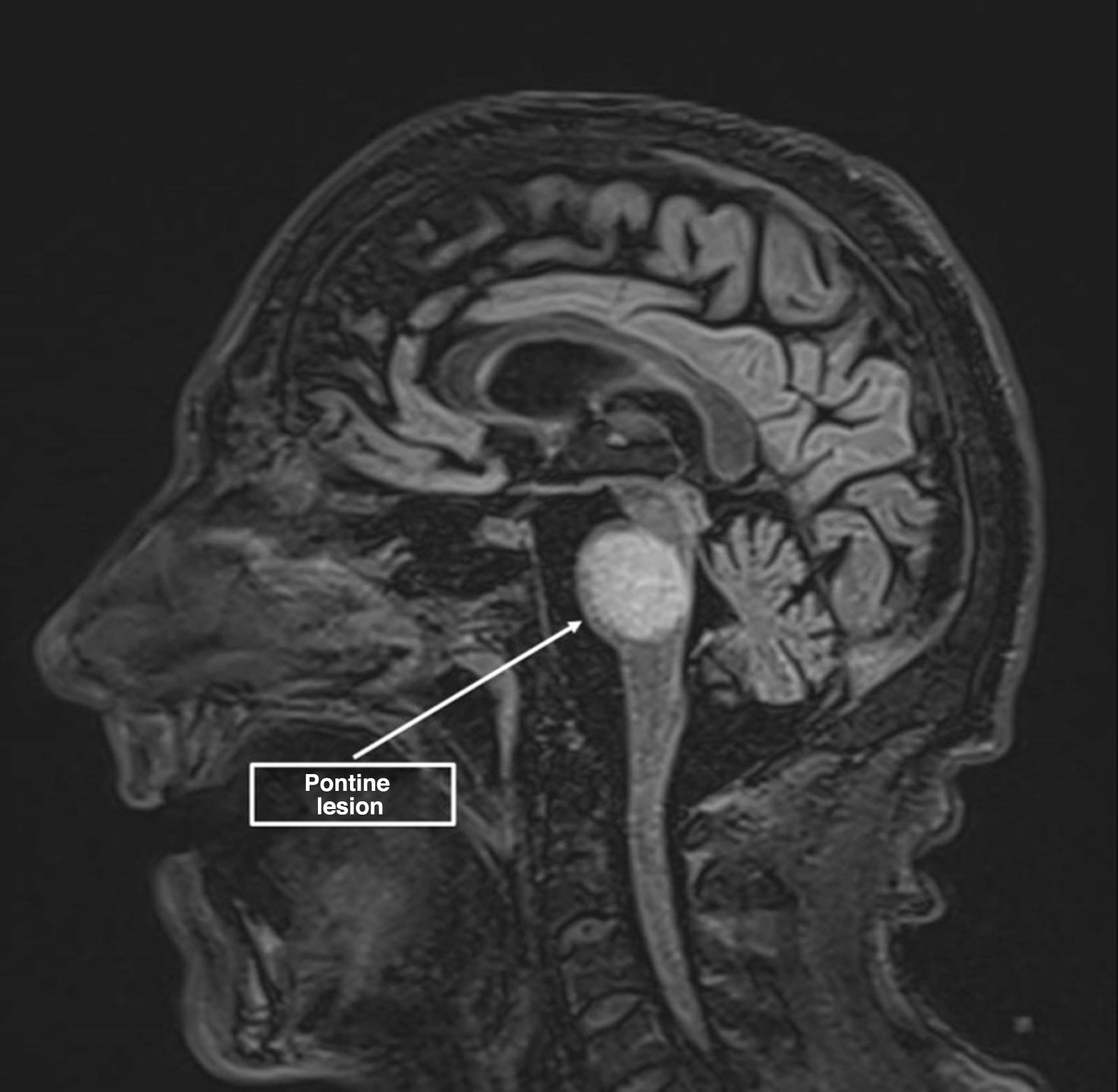
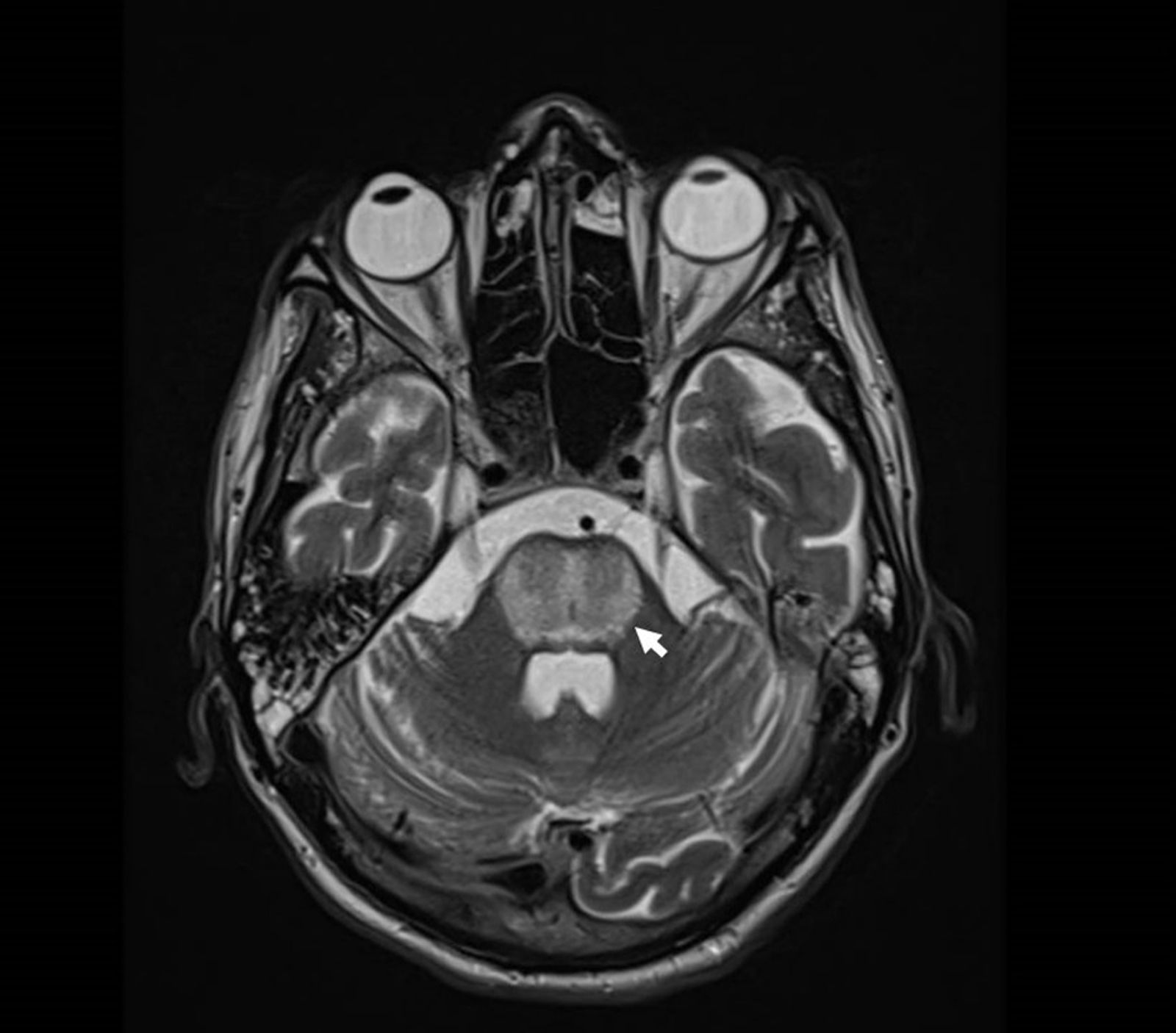
Más datosA 45-year-old male, with a history of homelessness, tobacco use, alcohol abuse and malnutrition, was admitted to hospital due to severe hypothermia, necessitating intubation. He also exhibited severe hyponatremia (116 mmol/l). The patient underwent progressive warming and water-electrolyte replacement until a sodium level of 134 mmol/l was attained after 48 h. This resulted in a favorable neurological status, as indicated by a Glasgow Coma Scale score of 15. The weaning process was complicated by the development of nosocomial pneumonia at 2 weeks, necessitating re-sedation, with minimal consciousness on awakening (Ocular: 4; Motor: 1), and no new changes in natremia. Magnetic resonance imaging (MRI) revealed an extensive pontine lesion (Figs. 1 and 2), suggestive of osmotic demyelination syndrome. This case exemplifies the pivotal role of MRI as the gold standard for diagnosing pontine myelinolysis, underscoring its multifactorial etiology (i.e., malnutrition and alcoholism) and the absence of a direct temporal relationship with the osmotic changes.
Financial supportThe authors declare that they have not received funding for the present study.