

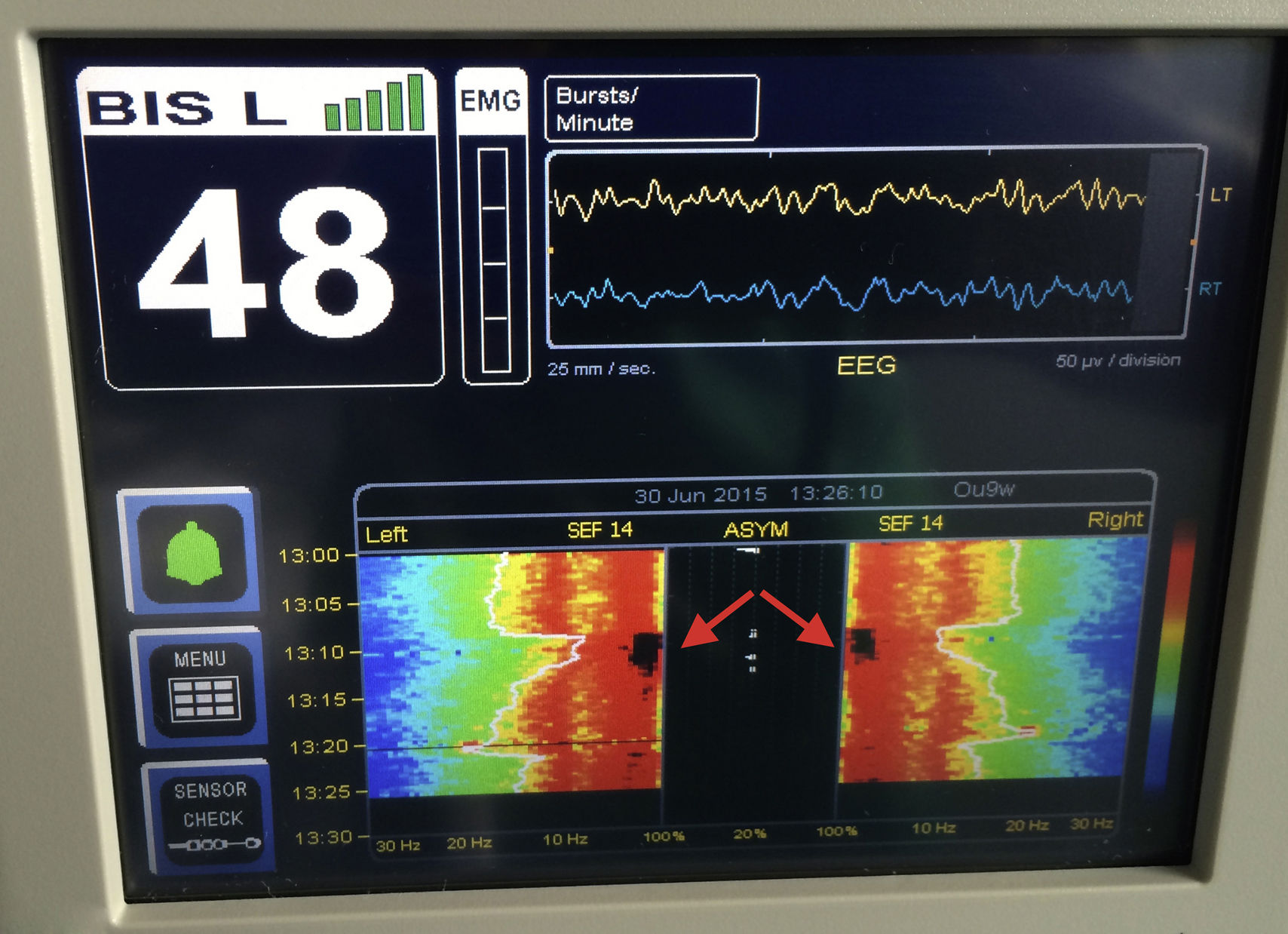
Patient admitted to the ICU due to idiopathic super-refractory status epilepticus monitored through EEG and bilateral BIS simultaneously.
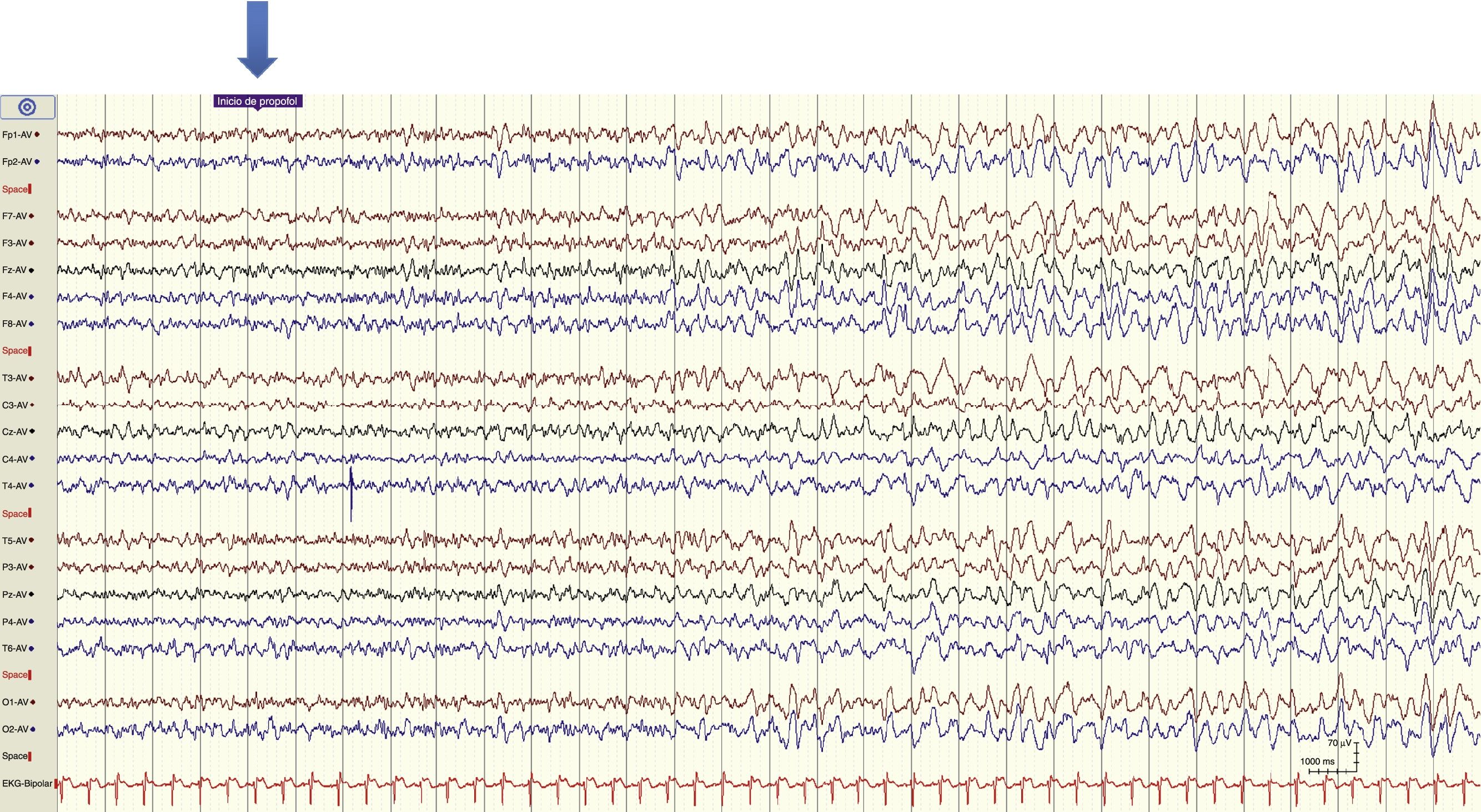
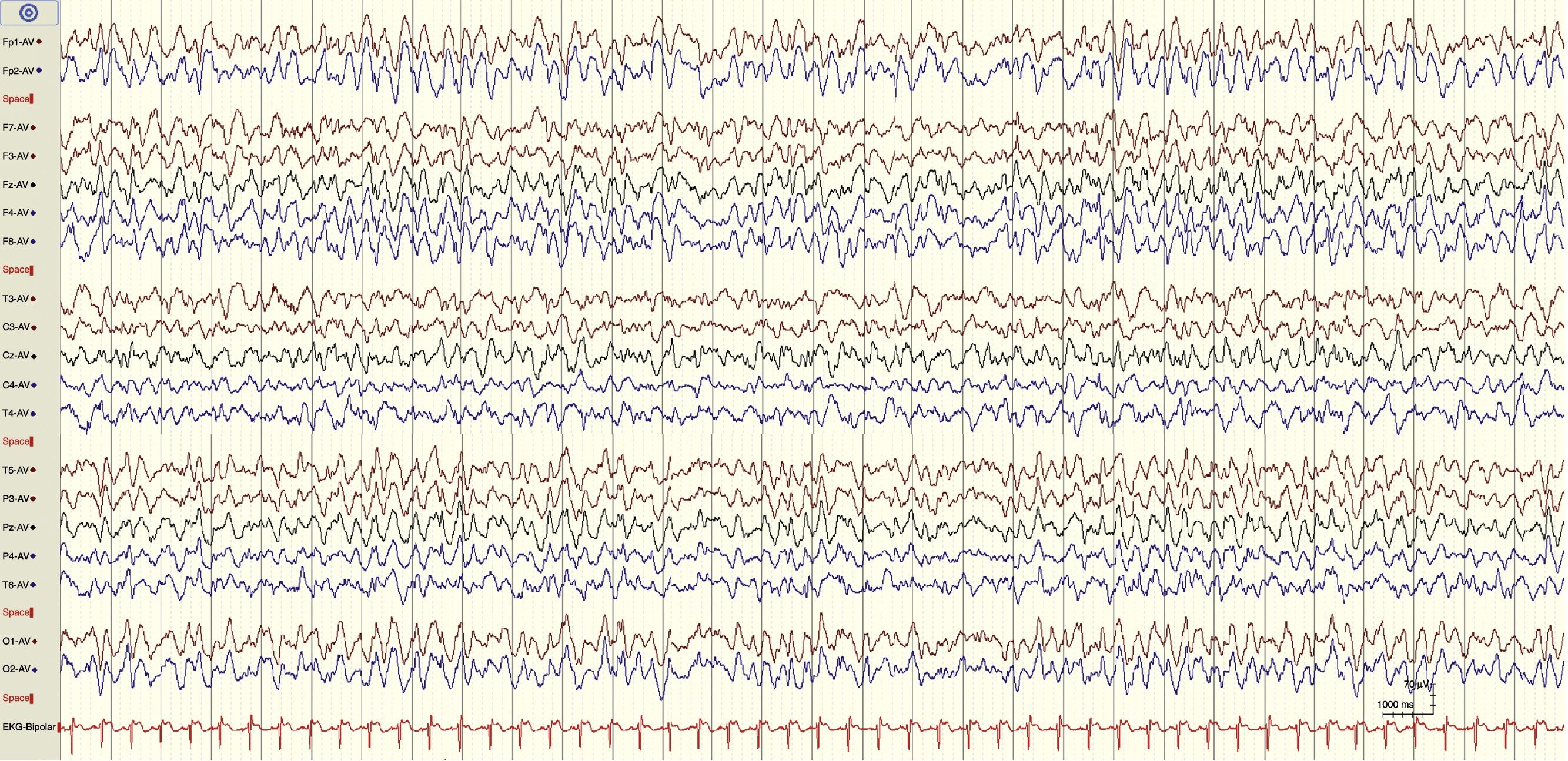
The basal EEG shows low-amplitude mixed activity with isolated epileptiform discharges in frontocentral regions. After the administration of one 20mg bolus of IV propofol (Fig. 1, blue arrow) we can see an increased epileptiform activity evolving towards rhythmic acute slow-wave pattern at 2–3Hz (Fig. 2).


The density spectral array of bilateral BIS, from 13:09 to 13:13h, shows a dark brown self-limited interval (Fig. 3, red arrows) consistent with the rhythmic pattern at 2–3Hz (both the BIS value and the EEG were taken at 13:26h).

The pattern is consistent with non-convulsive epileptic seizure that regressed spontaneously in 4min.
Please cite this article as: Zabaleguia A, Arroyo Diez M, Peláez Cruz RA. Crisis epiléptica no convulsiva inducida por propofol. Med Intensiva. 2018;42:e13–e14.