
EVALI is a rapidly developing toxic inhalation syndrome that has been linked to electronic cigarettes. It is characterized by a wide variety of radiological and histological patterns, with diffuse alveolar damage and acute respiratory distress syndrome being the most severe forms. This condition mainly affects young people and typically has a nonspecific clinical presentation. The diagnosis is one of exclusion, making it essential to thoroughly investigate into the medical history in order to perform a broad differential diagnosis that allows other causes to be ruled out. Treatment is based on supportive measures. Corticosteroids may be beneficial, although there is no standardized protocol and their use is highly heterogeneous. The lack of evidence on the long-term effects of vaping highlights the need for longitudinal studies and preventive strategies aimed at reducing its consumption.
La EVALI se define como una neumonitis por inhalación de rápida aparición asociada al uso de cigarrillos electrónicos. Se caracteriza por un amplio espectro de patrones radiológicos e histológicos, siendo el daño alveolar difuso y el síndrome de distrés respiratorio agudo su versión más grave. Esta condición afecta predominantemente a personas jóvenes, con manifestaciones clínicas inespecíficas. El diagnóstico es de exclusión, lo que hace imprescindible realizar una buena historia clínica para realizar un diagnóstico diferencial amplio que permita excluir otras causas. El tratamiento se basa en medidas de soporte. Los corticoides pueden ser beneficiosos, aunque no existe una pauta estandarizada y existe mucha heterogeneidad en su uso. La escasa evidencia sobre los efectos a largo plazo del vapeo subraya la necesidad de estudios longitudinales y estrategias preventivas orientadas a reducir su consumo.
E-cigarette or vaping product use–associated lung injury (EVALI) is defined as a rapidly developing inhalation-related pneumonitis associated with the use of electronic cigarettes. It was first described in the United States in 2019 following numerous outbreak-like episodes depicted mainly by acute respiratory failure associated with vaping use.1 It is characterized by a wide spectrum of radiologic and histologic patterns, most notably lipoid pneumonitis, organizing pneumonia, eosinophilic pneumonitis, hypersensitivity pneumonitis, diffuse alveolar damage, and acute respiratory distress syndrome (ARDS).2 Clinical presentation is nonspecific and similar to a respiratory infection, and the diagnosis is currently one of exclusion. This makes obtaining a thorough medical history essential to ensure a broad differential diagnosis that allows other causes to be ruled out.3 According to the U.S. Centers for Disease Control and Prevention (CDC), three criteria must be met4:
- •
A history of vaping within 90 days prior to symptom onset.
- •
Ground-glass opacities on chest computed tomography (CT) or chest radiograph.
- •
Respiratory symptoms in the absence of pulmonary infection or an alternative diagnosis explaining lung injury.
Electronic cigarettes or vape devices emerged in China in 2003 with the aim of reducing tobacco consumption—one of the most important modifiable risk factors and a major threat to public health.5 The device heats a liquid stored in a tank using an electrical resistance, converting it into vapor. It reached the European market in 2006 and, one year later, the U.S. market. During the early years, regulation of its manufacture and commercialization was inadequate,6 which resulted in exponential market growth, with millions of units sold within a few years7 and more than 41 million users in 2018.8 The dramatic rise in popularity among adolescents was particularly striking, many of whom had never smoked before.9
According to the 2018 National Youth Tobacco Survey conducted in the U.S., 4.9% of students aged 11–14 years and 20.8% of those aged 15–18 years had used an electronic cigarette at least once in the previous 30 days.10 In Spain, according to the 2023 State Survey on Drug Use in Secondary Education (ESTUDES),11 54.6% of students aged 14–18 years had used a vape device at least once.
The substances contained in e-cigarette liquids cause toxicity in various organs, although pulmonary toxicity is the most evident.12 From 2019 through February 2020, a total of 2807 cases of EVALI were diagnosed in the United States, 75% of them in individuals younger than 35 years.4 This condition is more common in young people, with a mean age of 24 years. Mortality is scare (2.42% in the U.S. up to February 2020) but higher in older patients, with a mean age of 49.5 years among those who died.4 A total of 60 deaths have been confirmed across 27 states and the District of Columbia.4
Due to its recent emergence, information about vaping-related toxicity is still limited, especially in the context of critically ill patients. Its widespread use in the general population, particularly among young people, underscores the importance of conducting this article to summarize current knowledge on EVALI and the health consequences of vaping.
The aim of this narrative review is to summarize the available literature on EVALI—its pathophysiology and clinical syndrome—as well as diagnostic and therapeutic options, with a focus on critically ill patients.
Materials and methodsWe conducted a narrative review of the scientific literature with the objective of describing current knowledge regarding EVALI. Although methodological guidelines specific to systematic reviews (such as PRISMA) were not strictly followed, strategies were adopted to ensure breadth and relevance in the selection of the literature.
Search strategySearches were conducted across three electronic databases: PubMed, Web of Science, and Embase, covering the period from January 2013 to April 2025. To maximize sensitivity, combinations of MeSH terms and keywords were used, including: “EVALI,” “electronic cigarette,” “e-cigarette,” “vaping,” “lung injury,” “lung toxicity,” “vitamin E acetate,” and “vaping-related disease.” Articles registered in clinicaltrials.gov were reviewed as well.
Additionally, the reference lists of key articles and previous reviews were manually searched to identify relevant publications not retrieved initially.
Inclusion and exclusion criteriaArticles were included if they met the following criteria: 1) original studies (observational, clinical, or preclinical), reviews, case reports, or case series; 2) published in English or Spanish; 3) focused on the health effects of vaping, with particular emphasis on EVALI; and addressed clinical, radiologic, pathologic, therapeutic, or pathophysiologic aspects.
Exclusion criteria included duplicate articles, brief communications without clinical data, and publications centered exclusively on other forms of nicotine consumption (conventional tobacco, IQOS) without relevance to EVALI.
Selection processTwo authors independently conducted an initial review of titles and abstracts. Potentially eligible articles were reviewed in full text, and discrepancies were resolved through consultation and discussion with a third author.
Ethical considerationsAs this was a narrative review involving no interventions on human subjects and no use of individual data, approval by an ethics committee was not required.
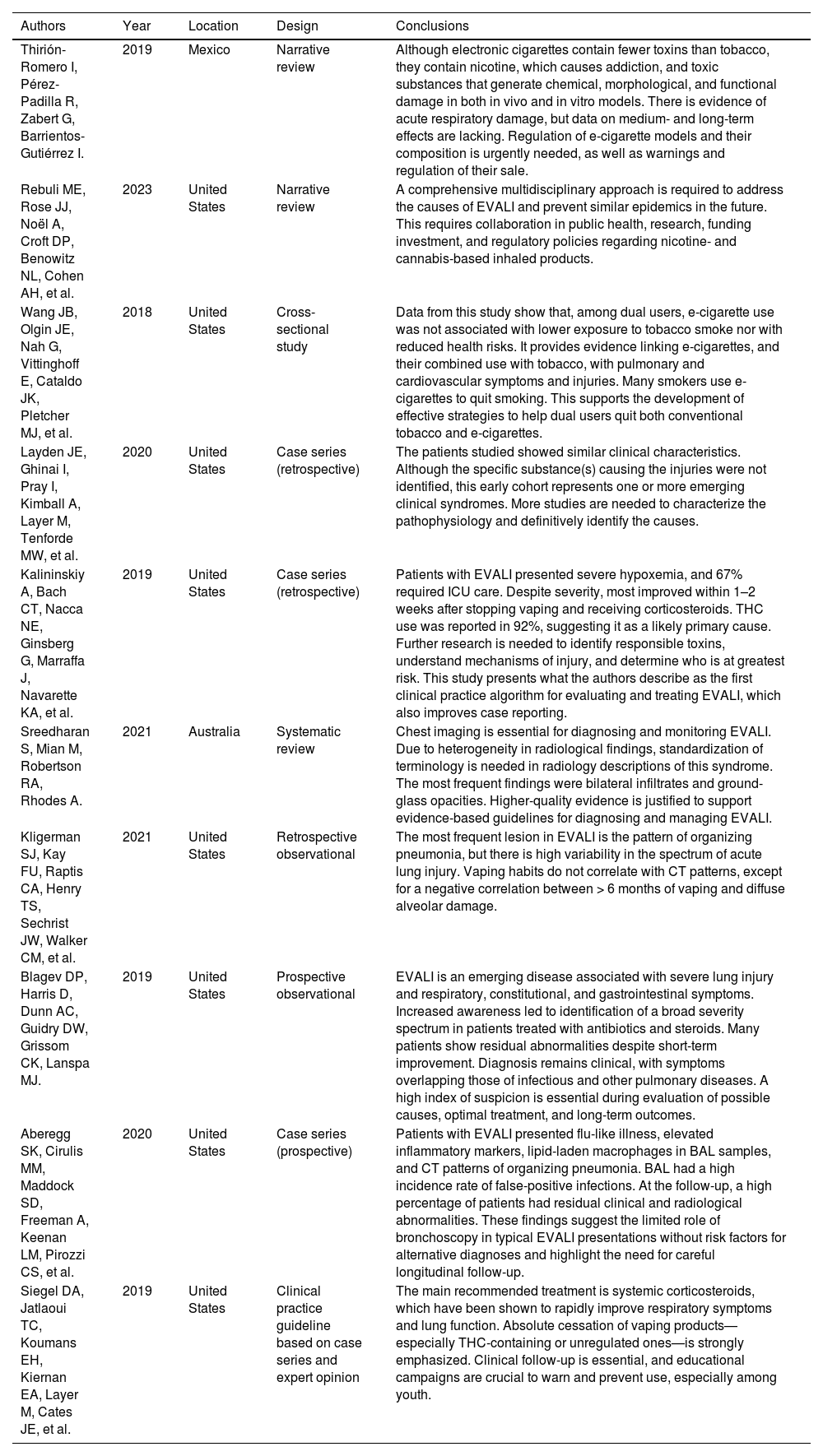
ResultsAfter applying the selection criteria, of the total number of records identified (n = 298), 75 articles were eventually included in the final review, the oldest being from 2010 and the most recent from 2023. The types of studies analyzed were as follows: one systematic review (1.33%), two randomized crossover clinical trials (2.66%), two prospective observational studies (2.66%), five retrospective observational studies (6.66%), five cross-sectional studies (6.66%), one case–control study (1.33%), six in vitro experimental studies (8%), six case series (8%), two single case reports (2.66%), 15 narrative reviews (20%), and one editorial (1.33%). Notably, 29 studies are currently ongoing (38.66%). Most were conducted in the United States. The main articles used for this review are summarized in Table 1.
Main reviewed studies.
| Authors | Year | Location | Design | Conclusions |
|---|---|---|---|---|
| Thirión-Romero I, Pérez-Padilla R, Zabert G, Barrientos-Gutiérrez I. | 2019 | Mexico | Narrative review | Although electronic cigarettes contain fewer toxins than tobacco, they contain nicotine, which causes addiction, and toxic substances that generate chemical, morphological, and functional damage in both in vivo and in vitro models. There is evidence of acute respiratory damage, but data on medium- and long-term effects are lacking. Regulation of e-cigarette models and their composition is urgently needed, as well as warnings and regulation of their sale. |
| Rebuli ME, Rose JJ, Noël A, Croft DP, Benowitz NL, Cohen AH, et al. | 2023 | United States | Narrative review | A comprehensive multidisciplinary approach is required to address the causes of EVALI and prevent similar epidemics in the future. This requires collaboration in public health, research, funding investment, and regulatory policies regarding nicotine- and cannabis-based inhaled products. |
| Wang JB, Olgin JE, Nah G, Vittinghoff E, Cataldo JK, Pletcher MJ, et al. | 2018 | United States | Cross-sectional study | Data from this study show that, among dual users, e-cigarette use was not associated with lower exposure to tobacco smoke nor with reduced health risks. It provides evidence linking e-cigarettes, and their combined use with tobacco, with pulmonary and cardiovascular symptoms and injuries. Many smokers use e-cigarettes to quit smoking. This supports the development of effective strategies to help dual users quit both conventional tobacco and e-cigarettes. |
| Layden JE, Ghinai I, Pray I, Kimball A, Layer M, Tenforde MW, et al. | 2020 | United States | Case series (retrospective) | The patients studied showed similar clinical characteristics. Although the specific substance(s) causing the injuries were not identified, this early cohort represents one or more emerging clinical syndromes. More studies are needed to characterize the pathophysiology and definitively identify the causes. |
| Kalininskiy A, Bach CT, Nacca NE, Ginsberg G, Marraffa J, Navarette KA, et al. | 2019 | United States | Case series (retrospective) | Patients with EVALI presented severe hypoxemia, and 67% required ICU care. Despite severity, most improved within 1–2 weeks after stopping vaping and receiving corticosteroids. THC use was reported in 92%, suggesting it as a likely primary cause. Further research is needed to identify responsible toxins, understand mechanisms of injury, and determine who is at greatest risk. This study presents what the authors describe as the first clinical practice algorithm for evaluating and treating EVALI, which also improves case reporting. |
| Sreedharan S, Mian M, Robertson RA, Rhodes A. | 2021 | Australia | Systematic review | Chest imaging is essential for diagnosing and monitoring EVALI. Due to heterogeneity in radiological findings, standardization of terminology is needed in radiology descriptions of this syndrome. The most frequent findings were bilateral infiltrates and ground-glass opacities. Higher-quality evidence is justified to support evidence-based guidelines for diagnosing and managing EVALI. |
| Kligerman SJ, Kay FU, Raptis CA, Henry TS, Sechrist JW, Walker CM, et al. | 2021 | United States | Retrospective observational | The most frequent lesion in EVALI is the pattern of organizing pneumonia, but there is high variability in the spectrum of acute lung injury. Vaping habits do not correlate with CT patterns, except for a negative correlation between > 6 months of vaping and diffuse alveolar damage. |
| Blagev DP, Harris D, Dunn AC, Guidry DW, Grissom CK, Lanspa MJ. | 2019 | United States | Prospective observational | EVALI is an emerging disease associated with severe lung injury and respiratory, constitutional, and gastrointestinal symptoms. Increased awareness led to identification of a broad severity spectrum in patients treated with antibiotics and steroids. Many patients show residual abnormalities despite short-term improvement. Diagnosis remains clinical, with symptoms overlapping those of infectious and other pulmonary diseases. A high index of suspicion is essential during evaluation of possible causes, optimal treatment, and long-term outcomes. |
| Aberegg SK, Cirulis MM, Maddock SD, Freeman A, Keenan LM, Pirozzi CS, et al. | 2020 | United States | Case series (prospective) | Patients with EVALI presented flu-like illness, elevated inflammatory markers, lipid-laden macrophages in BAL samples, and CT patterns of organizing pneumonia. BAL had a high incidence rate of false-positive infections. At the follow-up, a high percentage of patients had residual clinical and radiological abnormalities. These findings suggest the limited role of bronchoscopy in typical EVALI presentations without risk factors for alternative diagnoses and highlight the need for careful longitudinal follow-up. |
| Siegel DA, Jatlaoui TC, Koumans EH, Kiernan EA, Layer M, Cates JE, et al. | 2019 | United States | Clinical practice guideline based on case series and expert opinion | The main recommended treatment is systemic corticosteroids, which have been shown to rapidly improve respiratory symptoms and lung function. Absolute cessation of vaping products—especially THC-containing or unregulated ones—is strongly emphasized. Clinical follow-up is essential, and educational campaigns are crucial to warn and prevent use, especially among youth. |
EVALI: e-cigarette or vaping-associated lung injury; BAL: bronchoalveolar lavage; CT: computed tomography; THC: delta-9-tetrahydrocannabinol; ICU: Intensive Care Unit.
The included studies were thematically grouped into 5 categories: systemic toxicity, clinical features of EVALI, diagnosis, treatment, and ongoing studies.
- 1
Pulmonary and systemic toxicity due to electronic cigarettes. Pathogenesis of EVALI
- a
Main components of electronic cigarettes
- a
The main components of electronic cigarettes are solvents such as propylene glycol and vegetable glycerin, psychoactive compounds—predominantly nicotine and delta-9-tetrahydrocannabinol (THC)—as well as various flavoring agents.
Propylene glycol and vegetable glycerin act as irritants when heated and inhaled. They increase the risk of respiratory infections and worsen pre-existing conditions such as asthma or chronic obstructive pulmonary disease.13 Both can alter pulmonary surfactant and induce an inflammatory response.14
Vitamin E acetate, a synthetic form of this compound,15 is considered one of the main agents responsible for EVALI.16 It causes pulmonary inflammation, and its combustion produces other irritating and toxic compounds such as carbonyls and quinones.17
Nicotine, a psychoactive compound, causesan obstructive effect on the airways18 and acts on dopamine-releasing centers, generating a potent addictive effect19 whichis stronger in younger individuals.20
Moreover, heating vaping liquids generates toxic substances classified as carcinogenic, such as nitrosamines, certain heavy metals, polycyclic aromatic hydrocarbons, and formaldehyde.21
Two flavoring agents—diacetyl and 2,3-pentanedione—alter gene-expression pathways related to cilia and the cytoskeleton in normal human bronchial epithelial cells.22
- b
Systemic toxicity of vaping
- b
A possible association has been described between inhaled nicotine consumption and seizures in adolescents and young adults,23 as well as memory or behavioral disturbances.12
From a cardiovascular standpoint, vaping has been associated with palpitations, chest pain, various arrhythmias, and coronary artery disease.24 There is emerging evidence of increased cardiovascular risk associated with chronic vaping; however, evidence remains limited and is based mainly on preclinical studies, as no study with adequate long-term follow-up has yet been published.25 Moreover, preclinical studies25 suggest an increased risk of angina and acute myocardial infarction. Mohammadi et al.26 analyzed endothelial function in non-users, tobacco smokers, and e-cigarette users, concluding that e-cigarettes and tobacco smoking trigger different molecular responses. The study established an association between chronic e-cigarette use and increased inflammation and oxidative damage, leading to endothelial dysfunction and increased microvascular permeability, thereby raising cardiovascular risk similarly to tobacco smoking.26
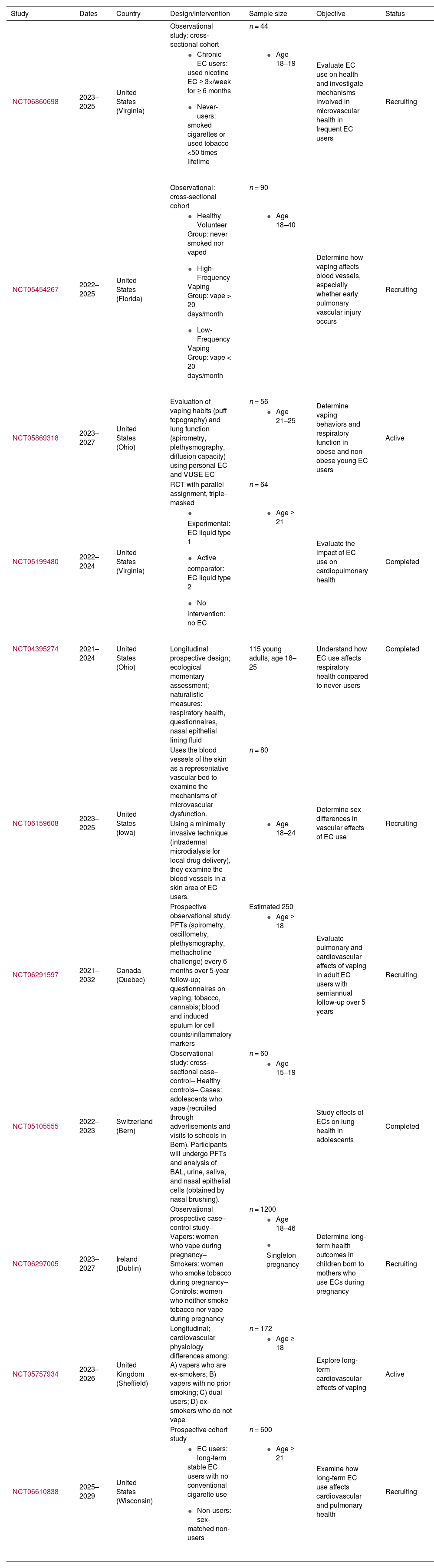
Currently, a wide variety of studies are underway to evaluate long-term toxicity, particularly at the cardiopulmonary level (Table 2).
Ongoing studies on long-term effects of chronic E-cigarette use (Current status).52
| Study | Dates | Country | Design/Intervention | Sample size | Objective | Status |
|---|---|---|---|---|---|---|
| NCT06860698 | 2023–2025 | United States (Virginia) | Observational study: cross-sectional cohort | n = 44 | Evaluate EC use on health and investigate mechanisms involved in microvascular health in frequent EC users | Recruiting |
|
| |||||
| NCT05454267 | 2022–2025 | United States (Florida) | Observational: cross-sectional cohort | n = 90 | Determine how vaping affects blood vessels, especially whether early pulmonary vascular injury occurs | Recruiting |
|
| |||||
| NCT05869318 | 2023–2027 | United States (Ohio) | Evaluation of vaping habits (puff topography) and lung function (spirometry, plethysmography, diffusion capacity) using personal EC and VUSE EC | n = 56 | Determine vaping behaviors and respiratory function in obese and non-obese young EC users | Active |
| ||||||
| NCT05199480 | 2022–2024 | United States (Virginia) | RCT with parallel assignment, triple-masked | n = 64 | Evaluate the impact of EC use on cardiopulmonary health | Completed |
|
| |||||
| NCT04395274 | 2021–2024 | United States (Ohio) | Longitudinal prospective design; ecological momentary assessment; naturalistic measures: respiratory health, questionnaires, nasal epithelial lining fluid | 115 young adults, age 18–25 | Understand how EC use affects respiratory health compared to never-users | Completed |
| NCT06159608 | 2023–2025 | United States (Iowa) | Uses the blood vessels of the skin as a representative vascular bed to examine the mechanisms of microvascular dysfunction. | n = 80 | Determine sex differences in vascular effects of EC use | Recruiting |
| Using a minimally invasive technique (intradermal microdialysis for local drug delivery), they examine the blood vessels in a skin area of EC users. |
| |||||
| NCT06291597 | 2021–2032 | Canada (Quebec) | Prospective observational study. PFTs (spirometry, oscillometry, plethysmography, methacholine challenge) every 6 months over 5-year follow-up; questionnaires on vaping, tobacco, cannabis; blood and induced sputum for cell counts/inflammatory markers | Estimated 250 | Evaluate pulmonary and cardiovascular effects of vaping in adult EC users with semiannual follow-up over 5 years | Recruiting |
| ||||||
| NCT05105555 | 2022–2023 | Switzerland (Bern) | Observational study: cross-sectional case–control– Healthy controls– Cases: adolescents who vape (recruited through advertisements and visits to schools in Bern). Participants will undergo PFTs and analysis of BAL, urine, saliva, and nasal epithelial cells (obtained by nasal brushing). | n = 60 | Study effects of ECs on lung health in adolescents | Completed |
| ||||||
| NCT06297005 | 2023–2027 | Ireland (Dublin) | Observational prospective case–control study– Vapers: women who vape during pregnancy– Smokers: women who smoke tobacco during pregnancy– Controls: women who neither smoke tobacco nor vape during pregnancy | n = 1200 | Determine long-term health outcomes in children born to mothers who use ECs during pregnancy | Recruiting |
| ||||||
| NCT05757934 | 2023–2026 | United Kingdom (Sheffield) | Longitudinal; cardiovascular physiology differences among: A) vapers who are ex-smokers; B) vapers with no prior smoking; C) dual users; D) ex-smokers who do not vape | n = 172 | Explore long-term cardiovascular effects of vaping | Active |
| ||||||
| NCT06610838 | 2025–2029 | United States (Wisconsin) | Prospective cohort study | n = 600 | Examine how long-term EC use affects cardiovascular and pulmonary health | Recruiting |
|
|
EC: electronic cigarette; RCT: randomized clinical trial; BAL: bronchoalveolar lavage; PFT: pulmonary function tests.
Vaping compounds act as irritants or toxins in the airway, generating an inhalation pneumonitis. Its use has been associated with various respiratory diseases,27 including asthma in previously non-smokers.28
- c
Pathogenesis of EVALI
- c
EVALI is a syndrome caused by an acute pulmonary inflammatory reaction in response to toxic substances contained in e-cigarette liquids. It involves damage to the alveolar–capillary membrane, resulting in increased permeability, recruitment of inflammatory cells, and alveolar collapse.29
The cause of the syndrome is still unclear. Vitamin E acetate has been linked to the formation of lipid-laden “foamy” macrophages that cause inflammatory lung injury; it is also associated with surfactant dysfunction.30 Toxic effects on alveolar macrophages lead to increased reactive oxygen species and inflammatory cytokines, as well as enhanced apoptosis and necrosis.31 Furthermore, severe inflammatory responses and edema may result from the pyrolysis products of vitamin E acetate rather than the original compound per se.2
Similarly, other components have been associated with changes at cellular level, such as impaired protein synthesis, gene expression, and mitochondrial function. In the bronchial epithelium, ciliary function is altered.32
The use of vitamins as ingredients or additives is prohibited in Europe,33 which may explain the lower prevalence of EVALI in European countries vs the United States. Only 1 case originating in Europe has been documented—in Belgium in 2019—which resulted in death.34 However, the cellular and molecular mechanisms involved in the pathogenesis of EVALI remain incompletely understood.15
- 2
Clinical syndrome in patients with EVALI
- a
Clinical signs
As with the underlying pathophysiology, the clinical course of the disease remains uncertain. This syndrome typically presents with respiratory, constitutional, and GI symptoms, with a mean duration of seven days. The most common respiratory symptoms are cough, dyspnea, chest pain, and occasionally hemoptysis. GI symptoms include nausea, vomiting, abdominal pain, and diarrhea. Fever, weight loss, headache, myalgias, or fatigue may also occur.27,35 Among patients requiring admission to the Intensive Care Unit (ICU), initial symptoms were gastrointestinal in 76.1%, respiratory in 96.8%, and constitutional in 92%.36
Over the course of the disease, a high percentage of patients develop respiratory failure. Severe cases progress similarly to ARDS, requiring ICU admission and invasive mechanical ventilation (IMV).27
Less common presentations include acute eosinophilic pneumonia and diffuse alveolar hemorrhage.8 Among complications, the most notable is the air-leak syndrome, which may manifest as pneumothorax or pneumomediastinum.37
- b
Additional tests
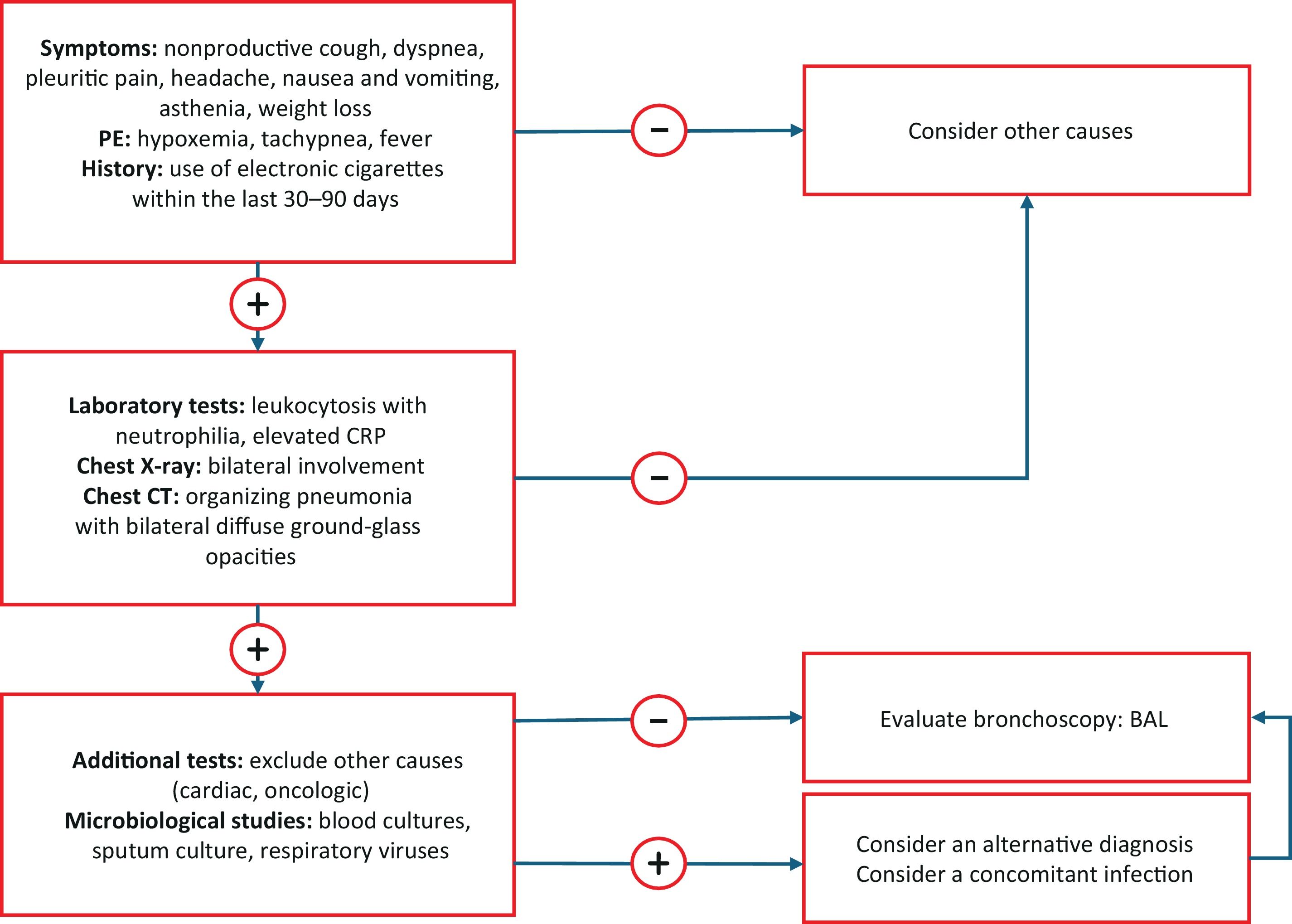
Diagnosing EVALI is challenging. Symptoms are highly nonspecific, necessitating a broad differential diagnosis for respiratory failure. Laboratory findings and imaging studies are heterogeneous and resemble other diseases with similar clinical features. This requires a high index of suspicion and a diagnosis of exclusion, including a history of vaping use in clinical assessment. At present, no specific or pathognomonic signs are known.
Laboratory testing typically shows nonspecific inflammatory markers. Microbiological studies are negative. Bronchoalveolar lavage reveals inflammation with increased neutrophils and macrophages and, in a high percentage of cases, vitamin E acetate is detected in the sample.27,35
Lung biopsy is not required for diagnosis. Findings are heterogeneous and may be influenced by prior treatments. Common findings include diffuse nonspecific inflammation, lipid-laden macrophage infiltrates, diffuse alveolar damage with bronchiolocentric distribution, and interstitial granulomatous pneumonitis. Small-airway injury with bronchiolitis may also be observed.38,39
Radiologic imaging in EVALI—both chest X-ray and CT—is variable. The most common pattern is organizing pneumonia with diffuse bilateral ground-glass opacities predominantly in the basal regions and patchy areas of consolidation. Subpleural, peribronchovascular, and lobular parenchyma are often preserved. A small proportion of patients may show nodules, mainly in the upper lobes.40,41
The most severe lesion described—associated with the highest mortality rate40—is diffuse alveolar damage with ground-glass opacities, consolidation with volume loss, and alveolar collapse with bronchial dilation. Histology shows alveolar edema, hyaline membranes, and interstitial proliferation or fibrosis.40
Other possible findings include interlobular septal thickening with a “crazy-paving” pattern, reversed halo sign, bilateral pleural effusion, mediastinal or hilar lymphadenopathy, pulmonary edema, and areas of fibrosis.27,40
Fig. 1 illustrates a diagnostic algorithm for EVALI.
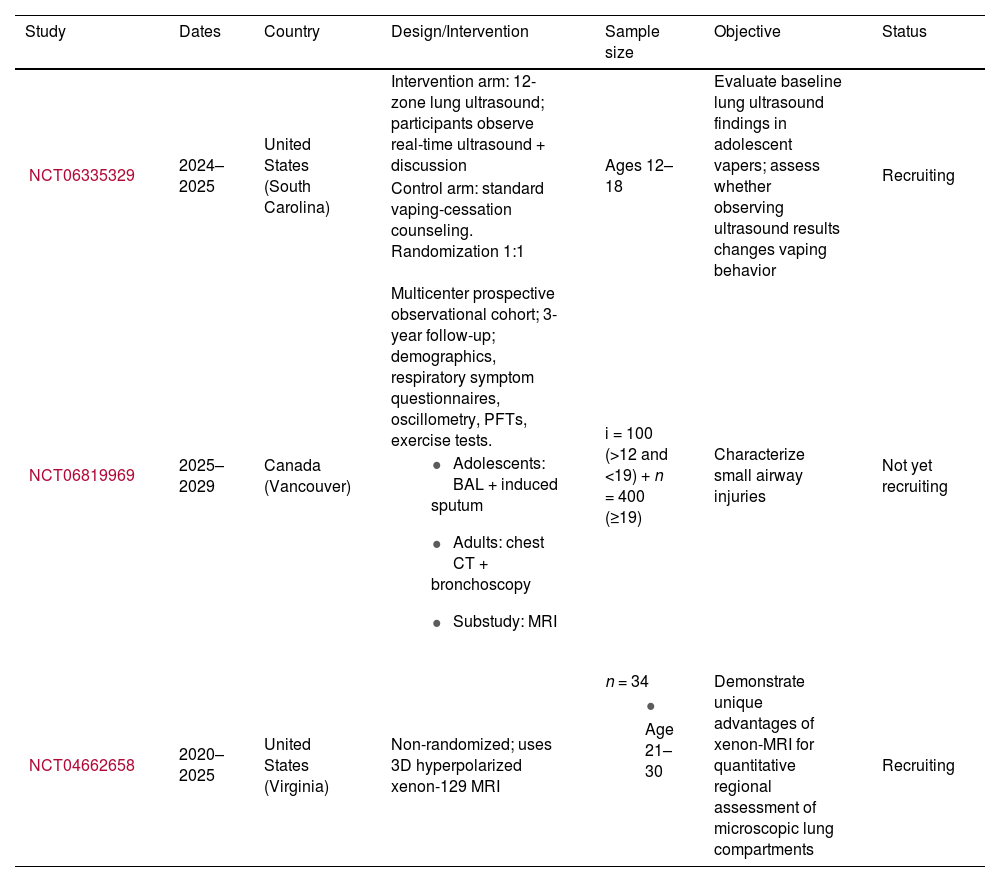
Table 3 summarizes ongoing studies investigating the diagnosis of EVALI.
- 2
Treatment of EVALI
Ongoing studies on diagnosis of EVALI (Current status).52
| Study | Dates | Country | Design/Intervention | Sample size | Objective | Status |
|---|---|---|---|---|---|---|
| NCT06335329 | 2024–2025 | United States (South Carolina) | Intervention arm: 12-zone lung ultrasound; participants observe real-time ultrasound + discussion | Ages 12–18 | Evaluate baseline lung ultrasound findings in adolescent vapers; assess whether observing ultrasound results changes vaping behavior | Recruiting |
| Control arm: standard vaping-cessation counseling. Randomization 1:1 | ||||||
| NCT06819969 | 2025–2029 | Canada (Vancouver) | Multicenter prospective observational cohort; 3-year follow-up; demographics, respiratory symptom questionnaires, oscillometry, PFTs, exercise tests. | i = 100 (>12 and <19) + n = 400 (≥19) | Characterize small airway injuries | Not yet recruiting |
| ||||||
| NCT04662658 | 2020–2025 | United States (Virginia) | Non-randomized; uses 3D hyperpolarized xenon-129 MRI | n = 34 | Demonstrate unique advantages of xenon-MRI for quantitative regional assessment of microscopic lung compartments | Recruiting |
|
BAL: bronchoalveolar lavage; PFT: pulmonary function tests; MRI: magnetic resonance imaging; CT: computed tomography.
Initial treatment is empirical, including even empirical antibiotic therapy until infectious causes are excluded, and is fundamentally based on supportive measures.
Corticosteroids may be beneficial due to their anti-inflammatory effect. Among the 140 cases reported to the CDC in 2019 that received corticosteroids, 82% improved.42 The dose and duration of treatment are not established; no clinical trials have compared different dosing regimens, and they vary across case series. In the report of a 23-year-old patient with EVALI requiring high-flow nasal cannula (HFNC), 60 mg of prednisone per day followed by a taper over 2 weeks was administered.43 In another observational study, prednisone doses ranged from 40 to 60 mg for five to ten days.1 This regimen is heterogeneous even within the same department; in a retrospective study carried out in a pediatric ICU in Philadelphia,44 corticosteroid doses ranged from 30 to 60 mg with administration schedules between six and 24 h. Total treatment duration ranged between five and 21 days. In general, dosing is individualized according to severity, in collaboration with other services such as pulmonology.42,45 In some cases, delaying initiation until infectious disease has been excluded is advisable. Their use is based on observational studies with high heterogeneity; no clinical trial has demonstrated efficacy and since the natural progression of the syndrome is unknown, the improvement attributed to steroids may be related to other measures such as cessation of e-cigarette use.42,45 No ongoing study registered on clinicaltrials.gov is evaluating the role of corticosteroids or their dosing.
In cases of severe respiratory failure, IMV may be necessary and even veno-venous extracorporeal membrane oxygenation (V-V ECMO).27,42 A case of an adolescent requiring lung transplantation has been described.46 In the study by Layden et al.,27 98 patients with EVALI were followed, of whom 25 required IMV and 2 died. Blagev et al.⁴⁷ followed 60 patients, of whom 10 required IMV and 2 died.
In a retrospective observational study conducted by the CDC across 50 states, the District of Columbia, Puerto Rico, and the United States Virgin Islands from August 2019 to January 2020, health records of hospitalized patients with confirmed or probable EVALI were analyzed.36 A total of 2708 patients were included, of whom 705 (44%) required ICU admission. Of these, 97.7% showed bilateral parenchymal involvement on CT. Among ICU patients, 41.4% received non-invasive ventilation or HFNC, and more than one-third required advanced respiratory support: 36.1% were placed on IMV and 6.7% required V-V ECMO. Survival data were available for only 656 patients, of whom 7% died. In this study, 99.2% of ICU patients received antibiotics and 6.1% antivirals. Almost all (91.6%) received corticosteroids. No data were collected on causes of death or presence of non-respiratory organ failure.
What is currently known about EVALI pathophysiology indicates that at the pulmonary level there is a significant and specific risk of ventilation-associated lung injury. This results from altered permeability in the distal bronchial tree and surfactant dysfunction. Areas of atelectasis develop that alter ventilation/perfusion ratios and lead to heterogeneous lung parenchyma prone to volutrauma. To avoid this, the use of ultra-protective ventilation strategies is essential in all patients requiring IMV.48 Pressure-controlled modes with low tidal volume (6 mL/kg ideal body weight), maintaining plateau pressure < 28 cmH₂O, and individualized PEEP titration ensuring a driving pressure < 15 cmH₂O are recommended. In patients with PaO₂/FiO₂ <150 mmHg, prone positioning should be considered. In severe ARDS that does not respond to these measures, early consideration of V-V ECMO is necessary, and if lung injury is irreversible due to EVALI, lung transplantation should be considered.36,48 Extracorporeal CO₂ removal systems may be required in certain circumstances.48 The role of V-V ECMO, whether as a bridge to lung transplantation or to recovery, is mainly to prevent IMV-induced lung injury, as it allows the use of ultra-protective ventilation while maintaining adequate gas exchange.49 A case has been described of a 19-year-old with EVALI presenting with a right pneumothorax requiring V-V ECMO to ensure ultra-protective ventilation.49 Cannulation occurred after one day of IMV, with a total IMV duration of eight days and V-V ECMO support for seven days. Length of stay went on for 13 days. Two weeks after discharge, chest X-ray and pulmonary function tests had normalized, with oxygen saturation at 100% without supplemental oxygen.
The importance of cessation of e-cigarette use has been described both for improved recovery and for preventing relapses or associated conditions.42,47
There are insufficient data regarding the syndrome’s prognosis, or whether IMV worsens its clinical course. Diffuse alveolar damage demonstrated on histology and imaging has been associated with mortality.40
Sequelae are uncertain, and long-term vital or functional prognosis is unknown. It has not been studied whether corticosteroid therapy decreases residual abnormalities or improves prognosis.27 In their case series, Aberegg et al.45 describe follow-up 11–28 days after discharge in which all patients improved, though residual symptoms were common. Pulmonary function tests showed mildly reduced predicted diffusing capacity. Between 2019 and 2021, a prospective observational study conducted in Utah, Idaho, and Nevada included a total of 73 patients with EVALI, 41.1% of whom required ICU admission.50 At 12 months, 39.1% had cognitive impairment, 48.4% respiratory impairment, and 59.4% symptoms of anxiety or depression. Post traumatic stress disorder (PTSD) symptoms occurred in 61.9%. No association was found between ICU admission and cognitive impairment, dyspnea, or mood-related symptoms. Severe dyspnea was present in 18.8% at 12 months, with an mMRC score increase from two to four, although pulmonary function tests were normal. After EVALI diagnosis, nicotine e-cigarette use decreased from 61% to 28% and THC vaping from 81% to 18.8%, but only 37.5% discontinued vaping and/or smoking.
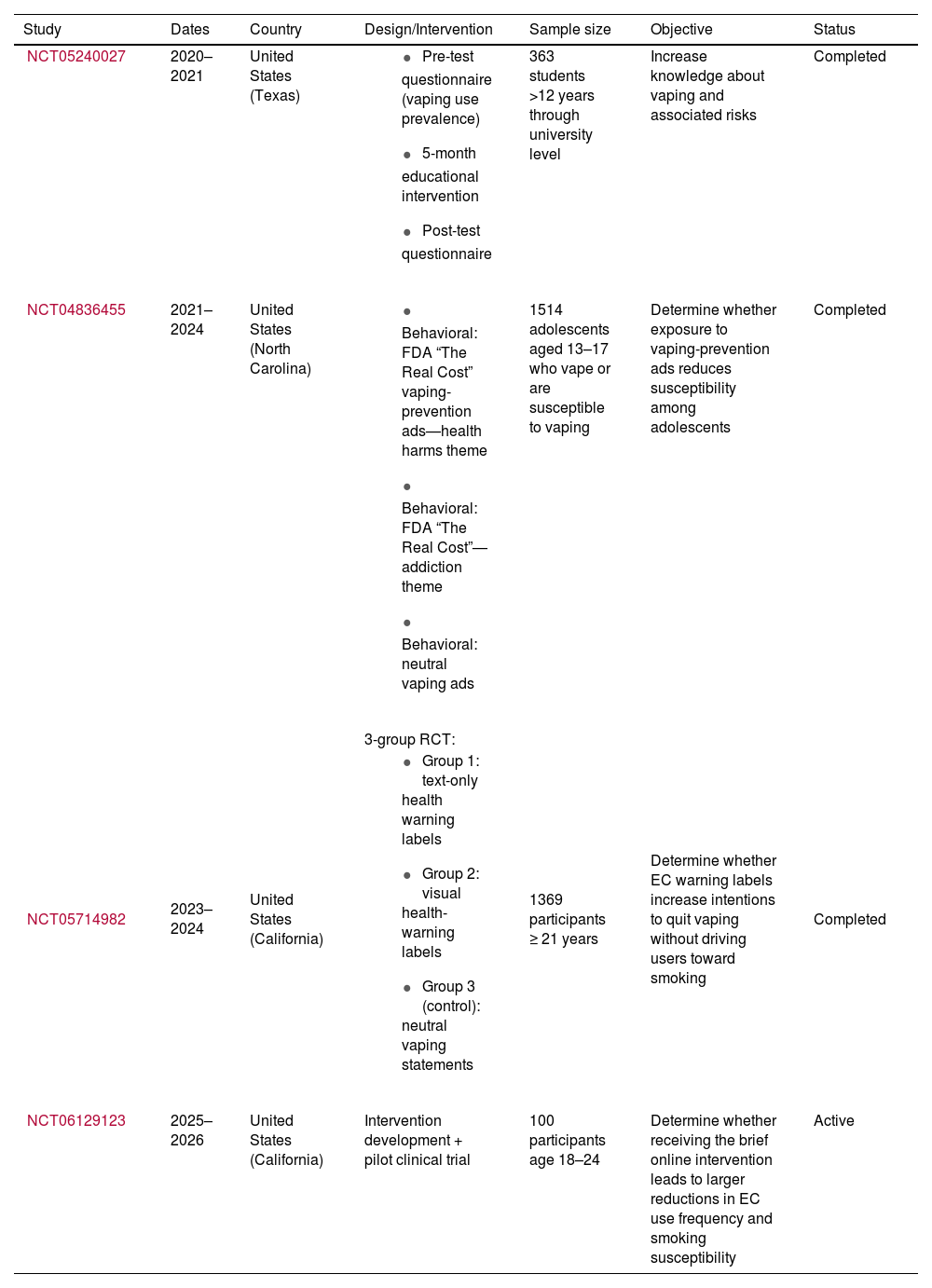
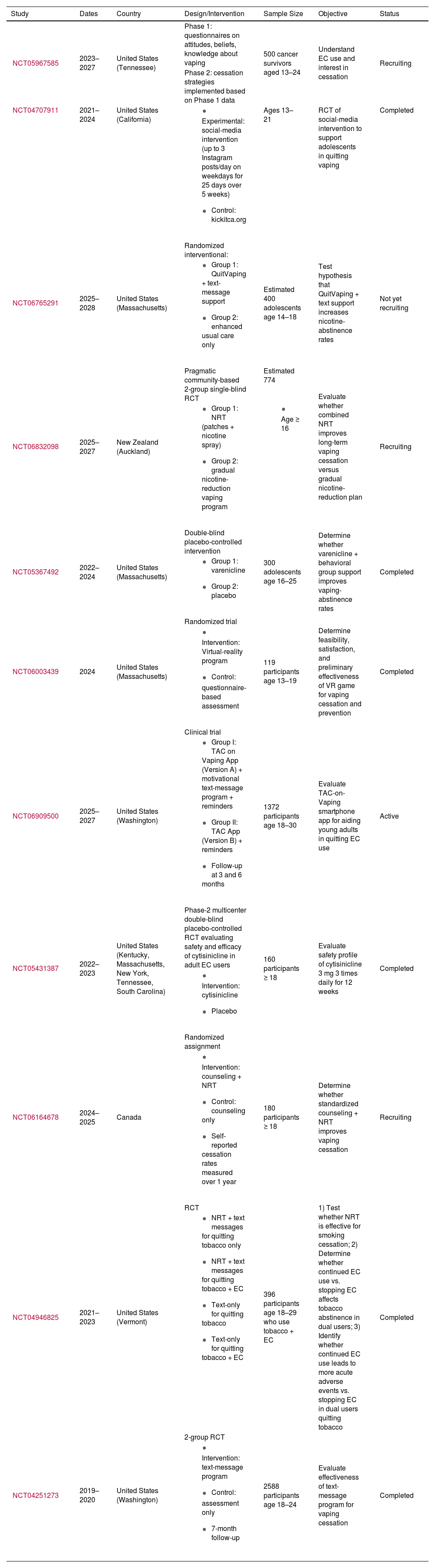
Awareness of the harmful effects associated with vaping makes implementation of public health measures essential. Education of at-risk populations is vital. Most ongoing studies evaluate prevention or cessation strategies, mainly targeting adolescents and young adults, considered at-risk populations (Tables 4 and 5). Socially, vaping is more accepted than tobacco use, reinforcing the erroneous view of vaping as a "healthier substitute." Recently, public policies such as increasing taxes on e-liquids have begun, although vaping in enclosed spaces such as bars or nightclubs has not yet been prohibited.51
Ongoing studies on prevention of vaping initiation.52
| Study | Dates | Country | Design/Intervention | Sample size | Objective | Status |
|---|---|---|---|---|---|---|
| NCT05240027 | 2020–2021 | United States (Texas) |
| 363 students >12 years through university level | Increase knowledge about vaping and associated risks | Completed |
| NCT04836455 | 2021–2024 | United States (North Carolina) |
| 1514 adolescents aged 13–17 who vape or are susceptible to vaping | Determine whether exposure to vaping-prevention ads reduces susceptibility among adolescents | Completed |
| NCT05714982 | 2023–2024 | United States (California) | 3-group RCT: | 1369 participants ≥ 21 years | Determine whether EC warning labels increase intentions to quit vaping without driving users toward smoking | Completed |
| ||||||
| NCT06129123 | 2025–2026 | United States (California) | Intervention development + pilot clinical trial | 100 participants age 18–24 | Determine whether receiving the brief online intervention leads to larger reductions in EC use frequency and smoking susceptibility | Active |
RCT: randomized clinical trial; FDA: Food and Drug Administration.
Ongoing studies on vaping cessation.52
| Study | Dates | Country | Design/Intervention | Sample Size | Objective | Status |
|---|---|---|---|---|---|---|
| NCT05967585 | 2023–2027 | United States (Tennessee) | Phase 1: questionnaires on attitudes, beliefs, knowledge about vaping | 500 cancer survivors aged 13–24 | Understand EC use and interest in cessation | Recruiting |
| Phase 2: cessation strategies implemented based on Phase 1 data | ||||||
| NCT04707911 | 2021–2024 | United States (California) |
| Ages 13–21 | RCT of social-media intervention to support adolescents in quitting vaping | Completed |
| NCT06765291 | 2025–2028 | United States (Massachusetts) | Randomized interventional: | Estimated 400 adolescents age 14–18 | Test hypothesis that QuitVaping + text support increases nicotine-abstinence rates | Not yet recruiting |
| ||||||
| NCT06832098 | 2025–2027 | New Zealand (Auckland) | Pragmatic community-based 2-group single-blind RCT | Estimated 774 | Evaluate whether combined NRT improves long-term vaping cessation versus gradual nicotine-reduction plan | Recruiting |
|
| |||||
| NCT05367492 | 2022–2024 | United States (Massachusetts) | Double-blind placebo-controlled intervention | 300 adolescents age 16–25 | Determine whether varenicline + behavioral group support improves vaping-abstinence rates | Completed |
| ||||||
| NCT06003439 | 2024 | United States (Massachusetts) | Randomized trial | 119 participants age 13–19 | Determine feasibility, satisfaction, and preliminary effectiveness of VR game for vaping cessation and prevention | Completed |
| ||||||
| NCT06909500 | 2025–2027 | United States (Washington) | Clinical trial | 1372 participants age 18–30 | Evaluate TAC-on-Vaping smartphone app for aiding young adults in quitting EC use | Active |
| ||||||
| NCT05431387 | 2022–2023 | United States (Kentucky, Massachusetts, New York, Tennessee, South Carolina) | Phase-2 multicenter double-blind placebo-controlled RCT evaluating safety and efficacy of cytisinicline in adult EC users | 160 participants ≥ 18 | Evaluate safety profile of cytisinicline 3 mg 3 times daily for 12 weeks | Completed |
| ||||||
| NCT06164678 | 2024–2025 | Canada | Randomized assignment | 180 participants ≥ 18 | Determine whether standardized counseling + NRT improves vaping cessation | Recruiting |
| ||||||
| NCT04946825 | 2021–2023 | United States (Vermont) | RCT | 396 participants age 18–29 who use tobacco + EC | 1) Test whether NRT is effective for smoking cessation; 2) Determine whether continued EC use vs. stopping EC affects tobacco abstinence in dual users; 3) Identify whether continued EC use leads to more acute adverse events vs. stopping EC in dual users quitting tobacco | Completed |
| ||||||
| NCT04251273 | 2019–2020 | United States (Washington) | 2-group RCT | 2588 participants age 18–24 | Evaluate effectiveness of text-message program for vaping cessation | Completed |
|
EC: electronic cigarette; RCT: randomized clinical trial; TAC: acceptance and commitment therapy; NRT: nicotine-replacement therapy.
This review addresses a highly relevant current topic, given the marked increase in e-cigarette use in recent years, especially among young people. It offers a general, integrative overview of updated literature on toxic effects of vaping components, and highlights EVALI as a severe and potentially fatal condition caused by their use.
In addition, it identifies areas of greatest uncertainty, opening paths for future research. There is a need for longitudinal studies assessing chronic vaping’s toxic effects—particularly pulmonary and cardiovascular—as an emerging risk factor. Regarding EVALI, diagnostic performance must be improved and adequate, effective treatment implemented, which requires deepening understanding of underlying pathophysiology. Evaluating the role of corticosteroids in both acute illness and long-term sequelae is essential, as is defining appropriate dosing and duration.
The main limitation of this review derives from the studies included, most of which are observational and retrospective.
ConclusionsE-cigarettes are the main determinant of EVALI, an inhalation pneumonitis causing a severe and potentially fatal respiratory disease. This process has emerged recently, in the context of widespread vaping over the past two decades. There are still no conclusive data; pathophysiology is uncertain, diagnosis is exclusionary, and therapeutic strategies are highly heterogeneous due to lack of standardization and protocols. Prognostic and long-term outcome data remain insufficient.
It is necessary to design longitudinal studies evaluating chronic exposure effects and randomized clinical trials addressing EVALI treatment.
Educational and public health interventions are essential to positively influence vulnerable populations (especially youth), raising awareness of the health risks linked to e-cigarette consumption.
CRediT authorship contribution statementAll authors contributed to study conception and design. ACC and ISG jointly conducted updated literature review and manuscript drafting. JMPV and ACCruz conducted the critical revision of the final document.
FundingNone declared.
Use of artificial intelligenceNo AI software or tools were used.
None declared.